Little Boy
Science and industry Build a Weapon
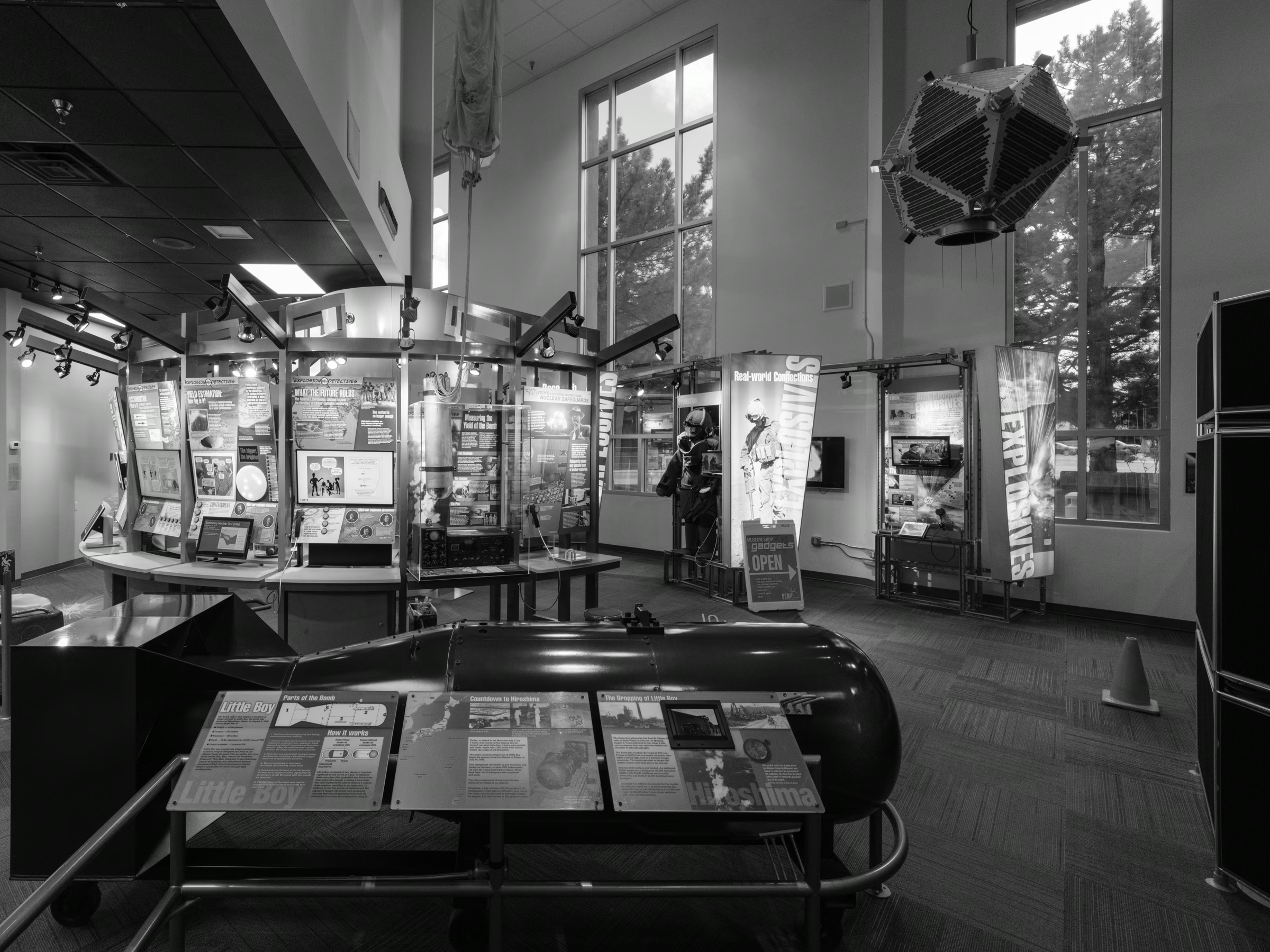


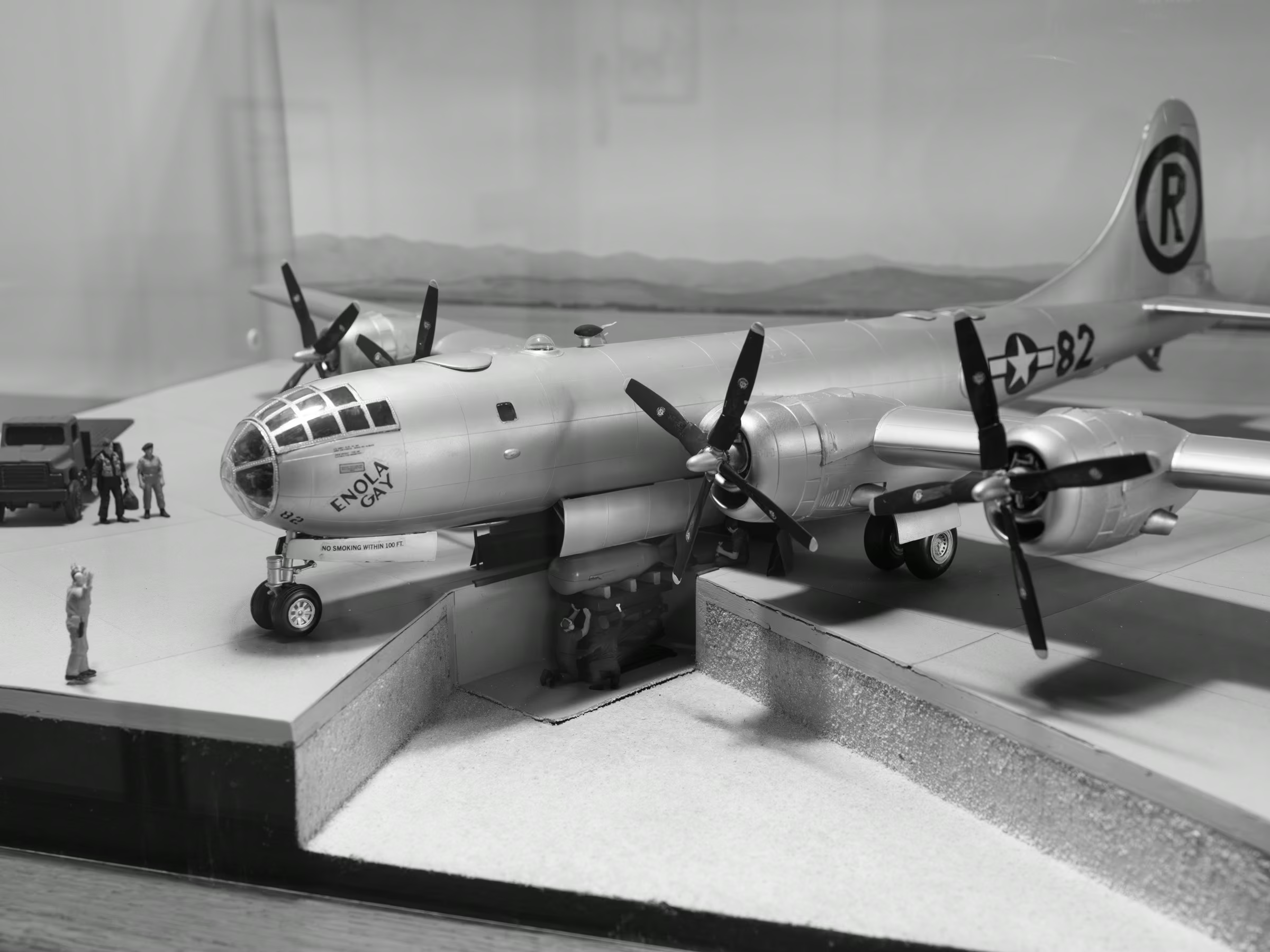
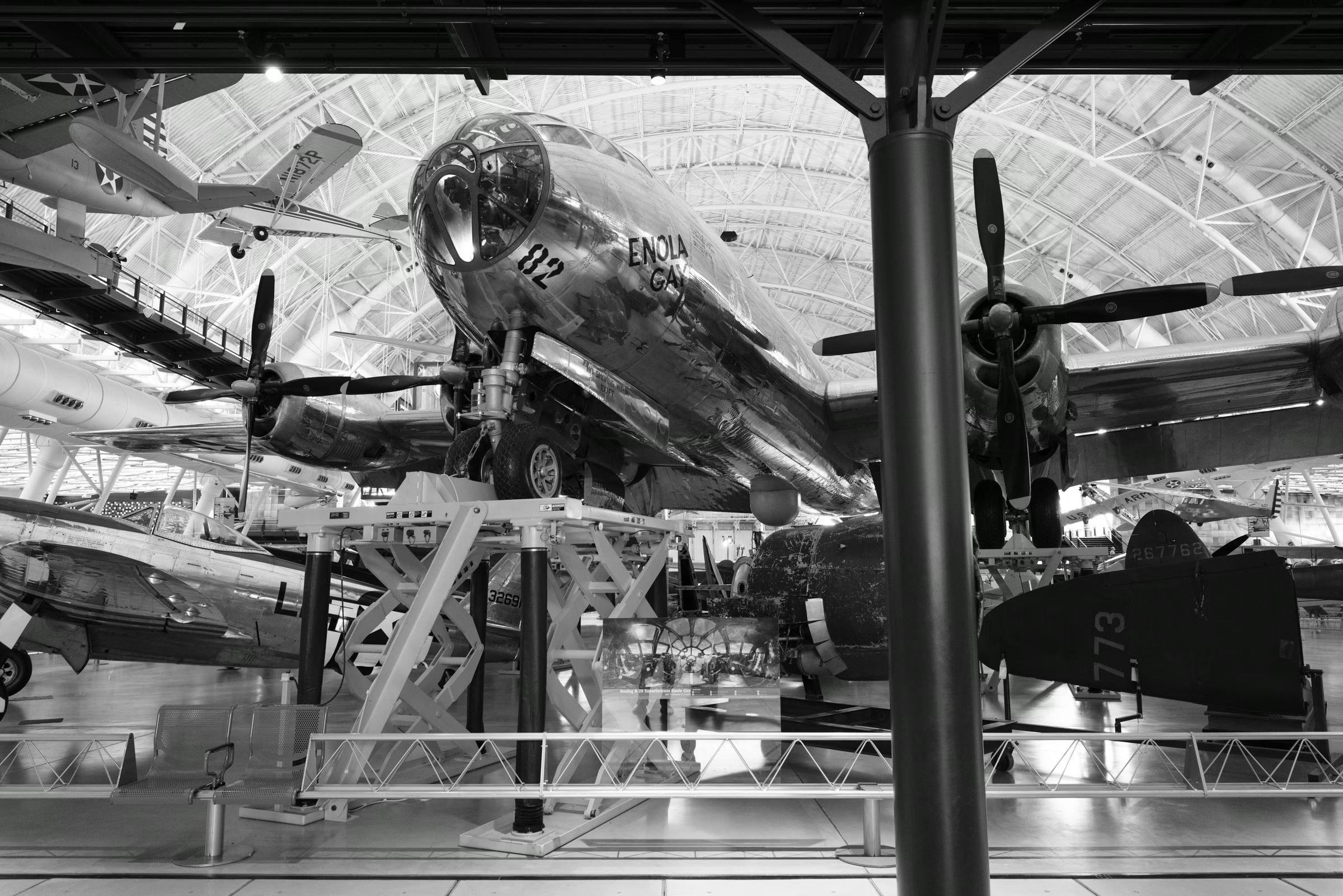
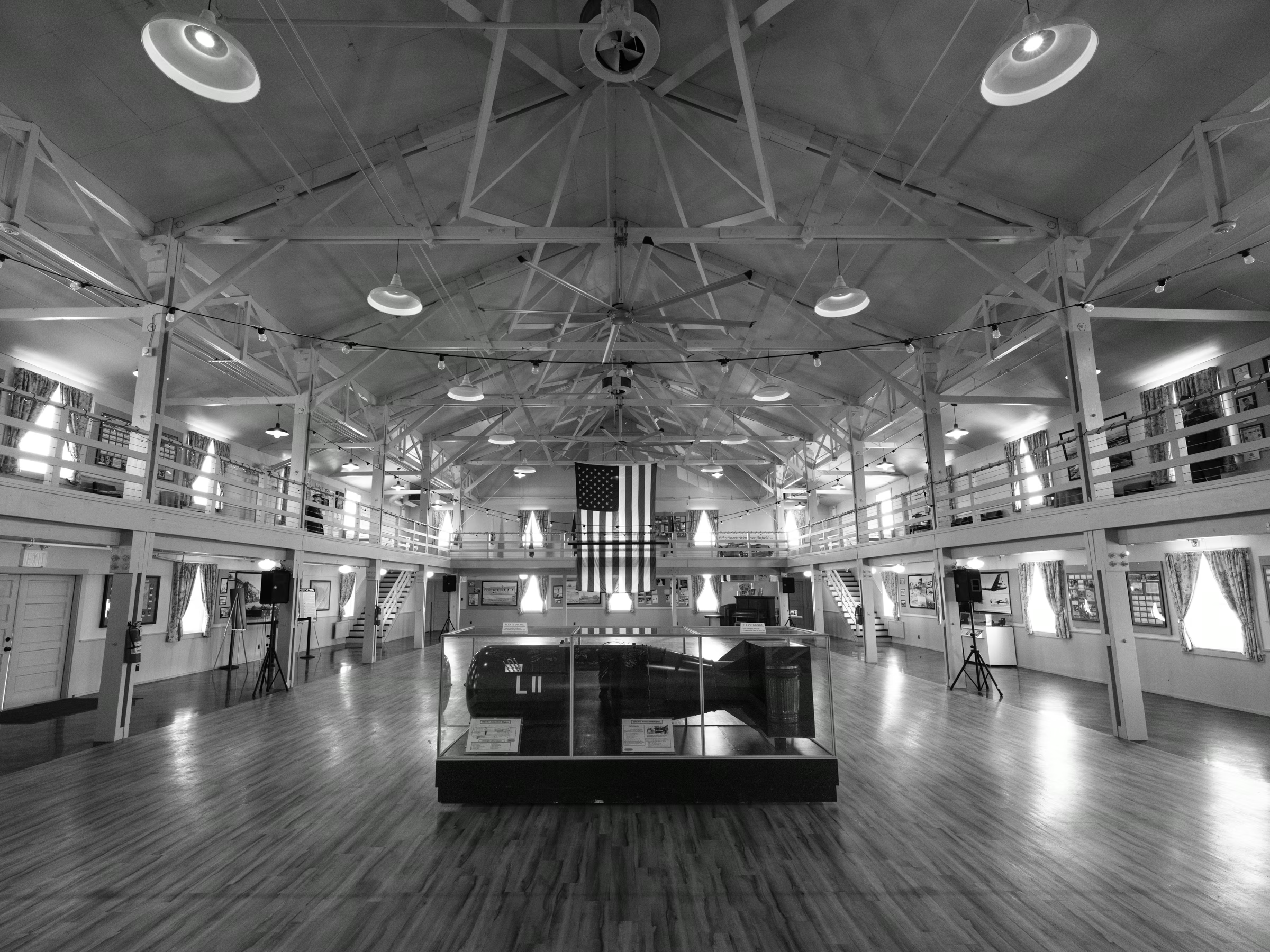


Weapon Specifications
Note that the relationship between explosive power and destruction is not linear—a weapon’s destructive effects grow far more slowly than its explosive power.
Explosive Power
15 kt
Hiroshima Equivalent Factor
1x
Dimensions
10 feet x 28 inches
Weight
9700 lbs
Year(s)
1945
Purpose
Force Japanese surrender
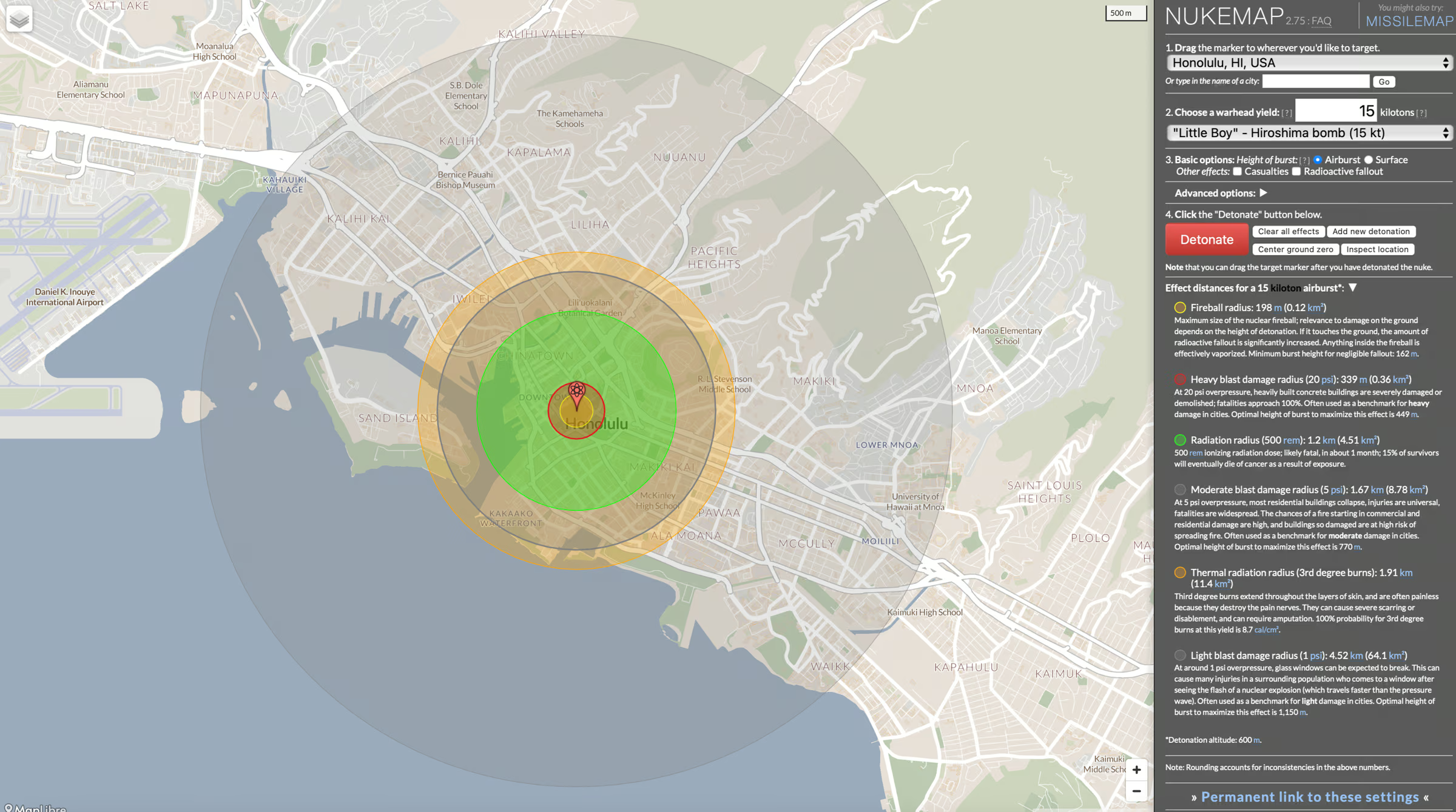
NukeMap
Simulated destruction of the Little Boy bomb as if detonated at Pearl Harbor, in Hawaii. Click on the map to change parameters.
Videos
These curated videos provide additional context for this weapon — showing test footage, deployment scenes, technical explanations, interviews, or other historical material, allowing viewers to go deeper into the weapon’s design, use, and place in nuclear history.
Keiko Ogura’s Interview, 1 hour
From AtomicHeritage: Keiko Ogura is a hibakusha, an atomic bomb survivor. She was eight years old on August 6, 1945, when the US dropped the “Little Boy” atomic bomb on Hiroshima. She eventually married Kaoru Ogura, who served as director of the Hiroshima Peace Memorial Museum and passed away in 1979. After his death, she took up the mission to spread knowledge about the bombings and keep the survivors’ stories alive.
President Truman Announces Bombing of Hiroshima, 3:42
From HarrySTrumanLibrary: Speaking from the ship USS Augusta, President Truman announced that the United States dropped the first atomic bomb on Hiroshima, Japan, on August 6, 1945. This recording does not include the full text of the written statement, but it’s the most complete recorded excerpt that we have.
Paul Tibbets Interview—Part 2, 21:16
From Kermit Weeks Channel: Part 2 of an interview I did many years ago with Paul Tibbets, at my Weeks Air Museum in Miami, Florida. In Part 1, Paul talked about his famous plane, the Enola Gay B-29 Superfortress that he flew on its secret mission during World War II. In Part 2 here, Paul talks a bit more about that Secret Mission.
John Coster-Mullen’s Interview, About 1 hour
From AtomicHeritage: John Coster-Mullen is a photographer, truck-driver, and nuclear archeologist. In this interview, he shares a number of turning point moments and recounts important conversations with Manhattan Project veterans and government officials. He also talks about his time visiting Japan and Tinian Island. Finally, he describes some of the nuclear artifacts he has acquired over the years.
Further Reading
- Wikipedia, Atomic Archive, and the National WWII Museum (New Orleans).
- If there is a standard text on the first nuclear bombs it is undoubtedly The Making of the Atomic Bomb, by Richard Rhodes, for which he won a Pulitzer Prize in 1987. I read it cover-to-cover when it came out in paperback in 1988 when I was in my early 20s.
- Although Oppenheimer is the star of the bomb development show in the popular imagination (as is generally though inaccurately credited with leading the Manhattan Project) the actual director of the Manhattan Project was Leslie Groves, who later wrote an account of his experiences, Now It Can Be Told: The Story Of The Manhattan Project. Oppenheimer worked for Groves on the design of the weapons, Kenneth Nichols had the responsibility for producing the nuclear material for the bombs. He wrote a book, too: The Road to Trinity. Both are fascinating day-by-day accounts of the development of the first nuclear weapons written by participants (indeed, by some of the leadership) of the development of the bombs.
- Coming out first as a single-article New Yorker issue and then a book, both published just weeks after the bombing of Hiroshima, no other publication has more greatly shaped public attitudes toward the bomb as those attitudes were first forming than John Hersey’s Hiroshima. Covering a half dozen graphic, sometimes horrific, first-hand accounts from survivors of Little Boy, this slim book has been in print continuously from October 1946 to today. (Finally available in Russia starting in 2020).
- War today seems distant and increasingly abstract to most US citizens. While neither Retribution: The Battle for Japan, 1944-1945 by Max Hastings nor Hitler: Downfall: 1939-1945 by Volker Ullrich are “nuclear weapons” books, both will give a clear sense to the reader of the total war for national survival that was World War II and that had Japan, Germany or Russia had an atomic bomb they would, of course, have used it.
- Yoshito Matsushige was a photographer for the local paper, Chugoku Shimbun, in Hiroshima when Little Boy was dropped. Over a hundred of his co-workers were killed and the newspaper’s building was destroyed, but Matsushige survived and made several images of the aftermath of the bombing. The paper still publishes and maintains a we page honoring his work-be sure to click on th expandable action at the bottom.
- The National Archives has an extensive online collection of primary source material on the Hiroshima (and Nagasaki) bombing worth exploring. See also the collection at the National Museum of the US Navy.
- John Coster-Mullen was an industrial photographer (and truck driver) who was also a well-known amateur nuclear archeologist, notably discovering in the late 1990s that all of the previously published diagrams of the internals of Little Boy were inaccurate. He is the subject of a short, slightly condescending NPR profile, “North Korea designed a nuke. So did this truck driver,” and a much fuller New Yorker profile, “Atomic John.” He published his own book, Atom Bombs: The Top Secret Inside Story of Little Boy and Fat Man (this Amazon listing is apparently from his estate) and Alex Wellerstein (of NUKEMAP fame) wrote a touching obituary.
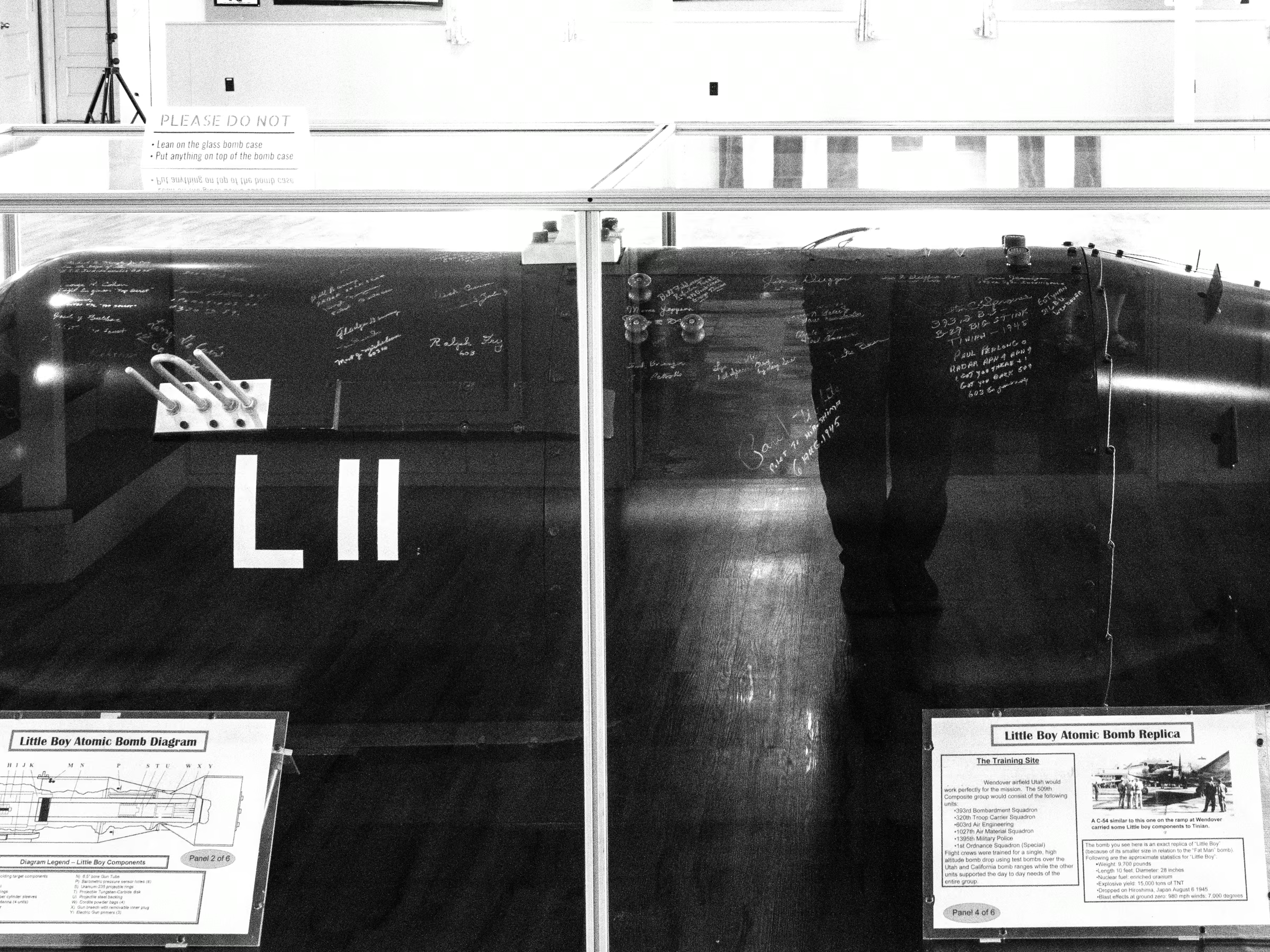
- Coster-Mullen,along with his son Jason, built a full-sized replica of Little Boy in 2004, commissioned by the Historic Wendell Airfield, in Utah. While driving the replica across country he stopped at Wichita for the reunion of the 509th Composite Group (the unit responsible for dropping the atomic bombs on Japan) and his Little Boy was signed by Paul Tibbets, the pilot of the Enola Gay, and others from the crew and their families. Here is a behind the scenes [download] look at the model as it was being built, with photos.
- M.G. Sheftall’s Hiroshima: Last Witnesses is an eye-opening book telling the story, based on numerous interviews of those who survived Little Boy, of efforts to rescue and treat victims, efforts to dispose of the tens of thousands of bodies, and the lingering effects–physical, emotional, and political of the atomic attack.